Also available as an ebook from your favourite retailer.
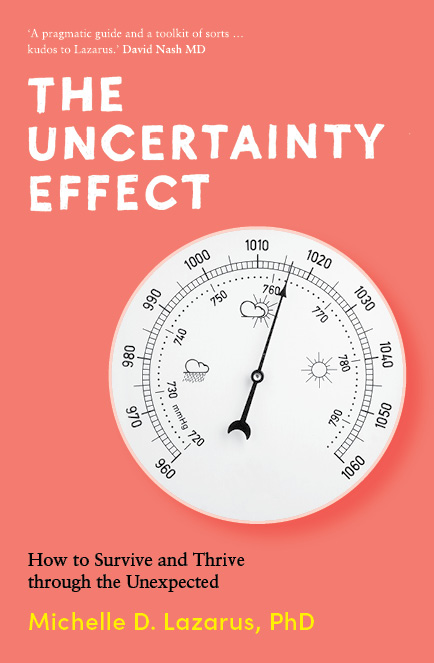
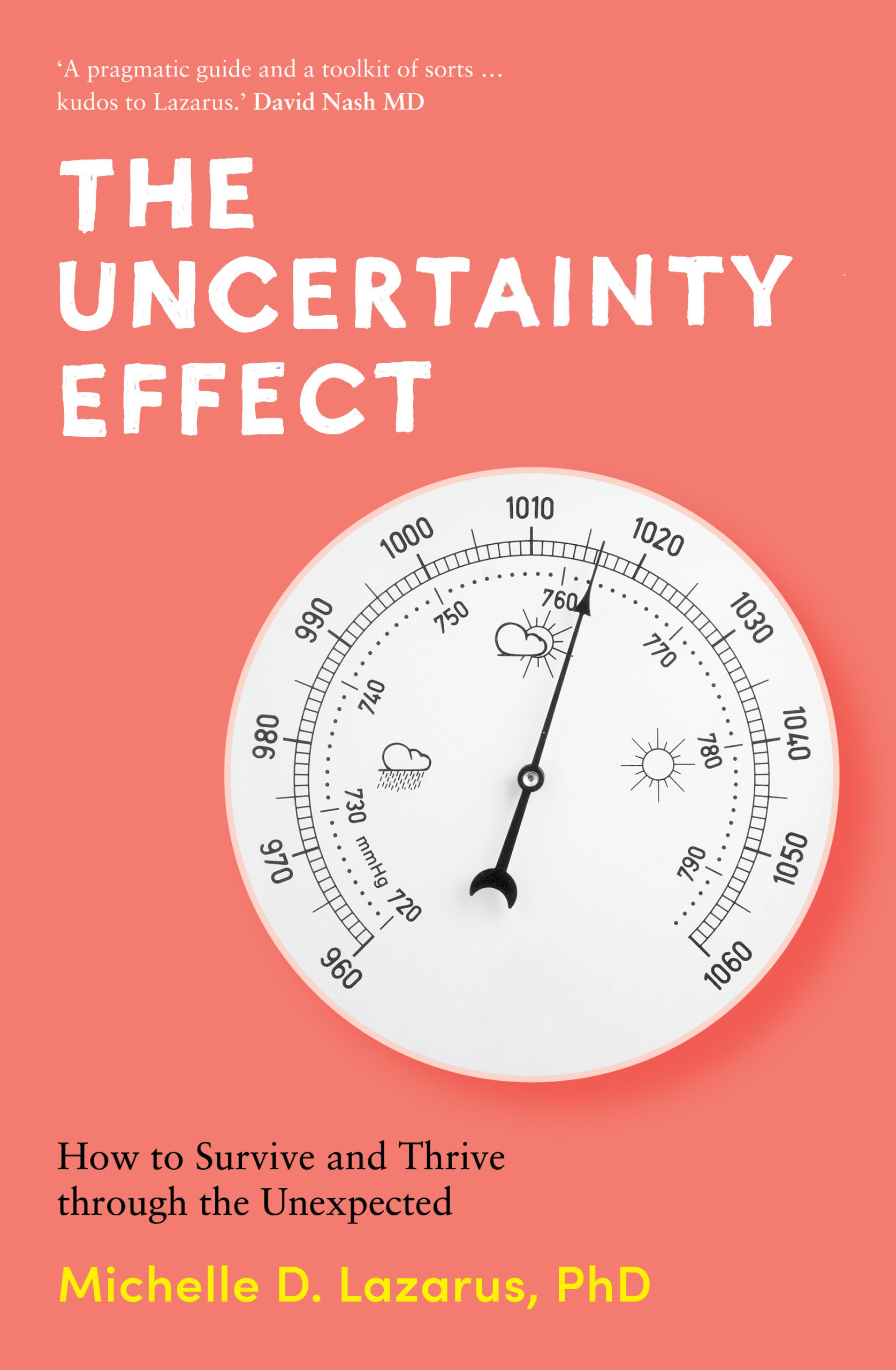
‘Change is the only constant, so uncertainty is universal and pervasive. We all need tools to understand and harness this phenomenon. Enter Lazarus, who has provided us with a pragmatic guide and a toolkit of sorts to grapple with uncertainty. By fostering uncertainty tolerance I am confident that this book will provide leaders in healthcare (my area) with, among other things, tools to reduce waste, improve care coordination and diagnostic accuracy, reduce harmful errors and ultimately improve clinical outcomes. What an amazing accomplishment – kudos to Lazarus.’ David Nash MD MBA, Founding Dean Emeritus, Dr Raymond C and Doris N Grandon Professor, Jefferson College of Population Health, Philadelphia, Pennsylvania
‘Lazarus points to scientific practice as an exemplar of how a creative and curious mindset can make uncertainty fertile.’ The Age/Sydney Morning Herald
A smart, practical book that shows us how to navigate uncertain times
In an age of pandemic and economic precarity, how can we learn to embrace uncertainty in our workplaces, schools and businesses? And how can better understanding uncertainty help us to build resilience, foster social inclusion and deal with the big issues, such as climate change?
Award-winning educator Michelle Lazarus shows us how uncertainty tolerance can help. Drawing on years of her team’s own research, Michelle examines how teachers can help prepare students for an uncertain workforce, how healthcare administrators can help to reduce burnout in doctors, how scientists can better model the effects of climate change and how we can all contribute to equity in our workplaces.
This lively book has an affirming message: we may not be able to predict the future, but we can learn to navigate it.
Michelle D. Lazarus is a professor at Monash University and the author of The Uncertainty Effect. In 2022 she won a prestigious AAUT Award, which recognises Australia’s most outstanding teachers, and her work on uncertainty appears regularly in research...
The Monash University Publishing website uses cookies to improve your experience.
We use cookies on our website to give you the most relevant experience by remembering your preferences and repeat visits. By clicking “Accept”, you consent to the use of ALL the cookies.
This website uses cookies to improve your experience while you navigate through the website. Out of these, the cookies that are categorized as necessary are stored on your browser as they are essential for the working of basic functionalities of the website. We also use third-party cookies that help us analyze and understand how you use this website. These cookies will be stored in your browser only with your consent. You also have the option to opt-out of these cookies. But opting out of some of these cookies may affect your browsing experience.
Necessary cookies are absolutely essential for the website to function properly. This category only includes cookies that ensures basic functionalities and security features of the website. These cookies do not store any personal information.
Any cookies that may not be particularly necessary for the website to function and is used specifically to collect user personal data via analytics, ads, other embedded contents are termed as non-necessary cookies. It is mandatory to procure user consent prior to running these cookies on your website.