‘By following geographer Sarah Hamylton on this enchanting voyage through time – via maps of atolls, reefs and spreading sea floors – a reader sees where longitude and latitude yield to insight and attitude.’ Dava Sobel, author of Longitude
‘This book opened my eyes wide to the power of maps and mapmakers to shape people’s views of the natural world. I’ve spent decades exploring the ocean, I’ve even helped make a few maps, and it never really occurred to me that there are no definitive maps of seascapes. Cartographers all have their own ways of seeing and knowing, and their own reasons for making maps. Sarah Hamylton expertly shows how maps reflect the many ways people study, understand, use, feel about and care for the ocean. Illuminating and erudite, Plotting the Oceans is required reading for map-lovers, nature-lovers, ocean-lovers and explorers of every kind.’ Helen Scales, author of What the Wild Sea Can Be
‘Sarah Hamylton deftly traces the work of those who dared to redraw the world’s edges and weaves their stories with her own fierce, meticulous mapping, showing us how every chart carries a reckoning with the world we are remaking and how our technologies, choices and imagination are reshaping the seas. Beautifully written and deeply felt, Plotting the Oceans uncovers the power, ambition and consequence of mapmakers, daring us to confront the political, ethical and environmental stakes behind every line we draw.’ Natalie Kyriacou OAM, author of Nature’s Last Dance
‘As well as offering us a vivid set of her own extensive cartographic adventures and scientific explorations, Sarah Hamylton brilliantly reveals the range and power of ocean map plotting, from Charles Darwin’s evolutionary discoveries of coral formation to Terry Hughes’ alarming exposures of today’s coral destruction on the Great Barrier Reef.’ Iain McCalman AO, author of The Reef
‘Plotting the Oceans is an illuminating investigation that traces how our knowledge of and stewardship over the world has evolved through the art and science of cartography. It will appeal to readers of science and nature writing, as well as anyone interested in the evolving relationship between humans and the planet.’ Books+Publishing
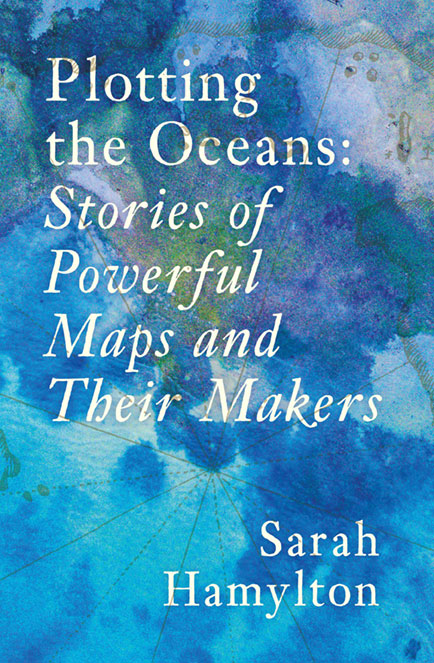
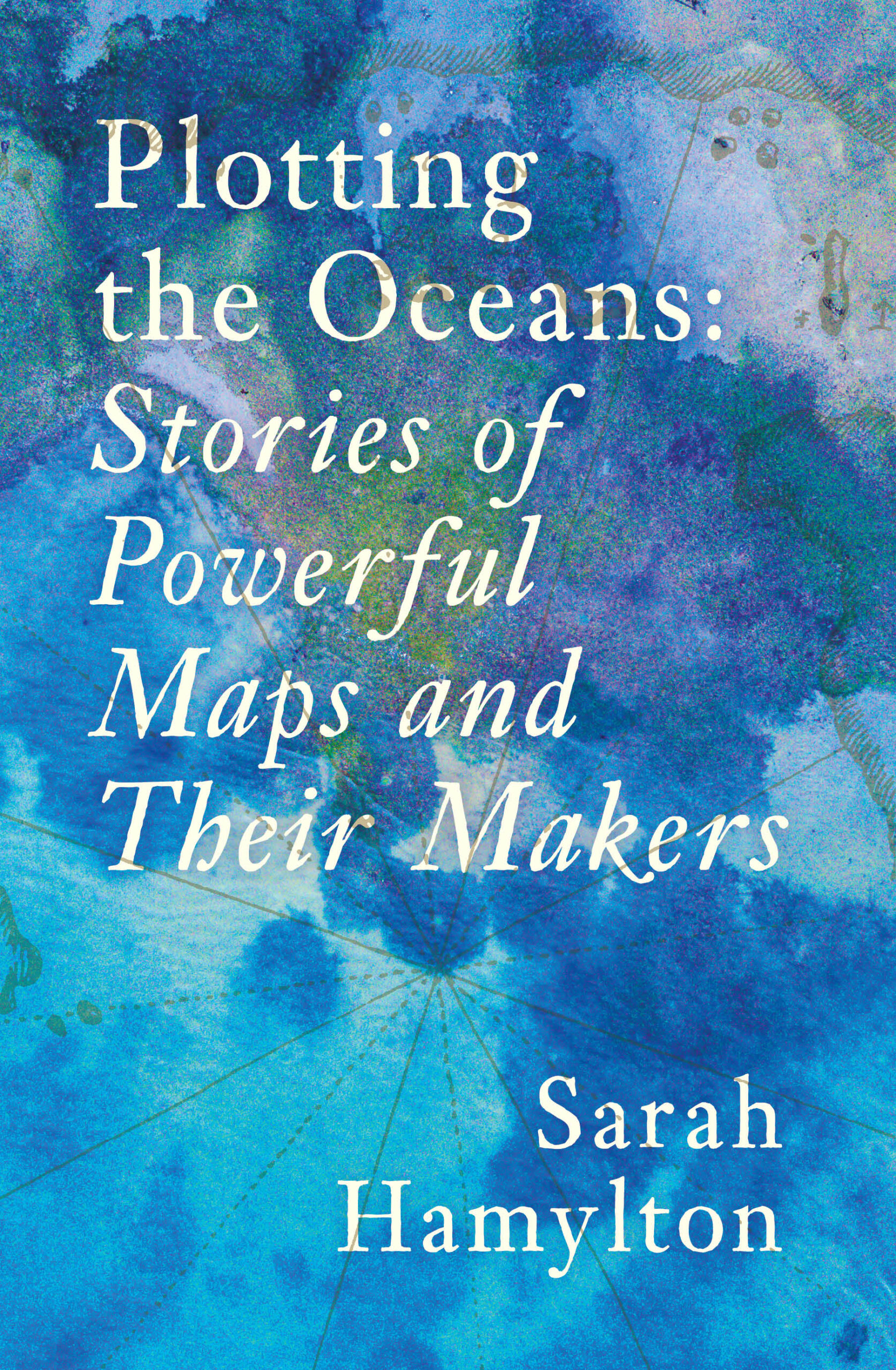
Five stories that demonstrate the history and power of maps – and the impact they have on our world
Charles Darwin mapped the world’s coral reefs to support a theory about how they formed, and in doing so developed insights that shaped his eventual theory of evolution. The trailblazing Marie Tharp, barred from ocean expeditions in the 1950s, nevertheless created the first detailed map of the ocean floor, providing key evidence for the then radical idea of continental drift. Maps have triggered territorial claims, saved giant tortoises and brought home the fragility of the Great Barrier Reef in the face of climate change.
Charting the course through these stories of discovery and disruption is Sarah Hamylton, herself an accomplished mapmaker who has travelled the globe and followed in the footsteps of cartographic giants. She explains what lies behind – and beyond – the maps we find in history books, scientific papers and contemporary news stories.
Riveting, illuminating and beautifully written, Plotting the Oceans answers critical questions about what the evolving nature of maps means for understanding our world, how it changes and how we’re changing it.
Listen to Sarah Hamylton’s interview on ABC Illawarra
Sarah Hamylton
Sarah Hamylton is an Associate Professor at the University of Wollongong, past President of the Australian Coral Reef Society and Director of the Spatial Analysis Laboratory. She has been sailing to, diving around and walking along shorelines to map coastal...
The Monash University Publishing website uses cookies to improve your experience.
We use cookies on our website to give you the most relevant experience by remembering your preferences and repeat visits. By clicking “Accept”, you consent to the use of ALL the cookies.
This website uses cookies to improve your experience while you navigate through the website. Out of these, the cookies that are categorized as necessary are stored on your browser as they are essential for the working of basic functionalities of the website. We also use third-party cookies that help us analyze and understand how you use this website. These cookies will be stored in your browser only with your consent. You also have the option to opt-out of these cookies. But opting out of some of these cookies may affect your browsing experience.
Necessary cookies are absolutely essential for the website to function properly. This category only includes cookies that ensures basic functionalities and security features of the website. These cookies do not store any personal information.
Any cookies that may not be particularly necessary for the website to function and is used specifically to collect user personal data via analytics, ads, other embedded contents are termed as non-necessary cookies. It is mandatory to procure user consent prior to running these cookies on your website.